Complete Guide to Student & Education Finance: Loans, Scholarships, 529 Plans, Forgiveness & Budgeting (2026)
Written on July 12, 2026
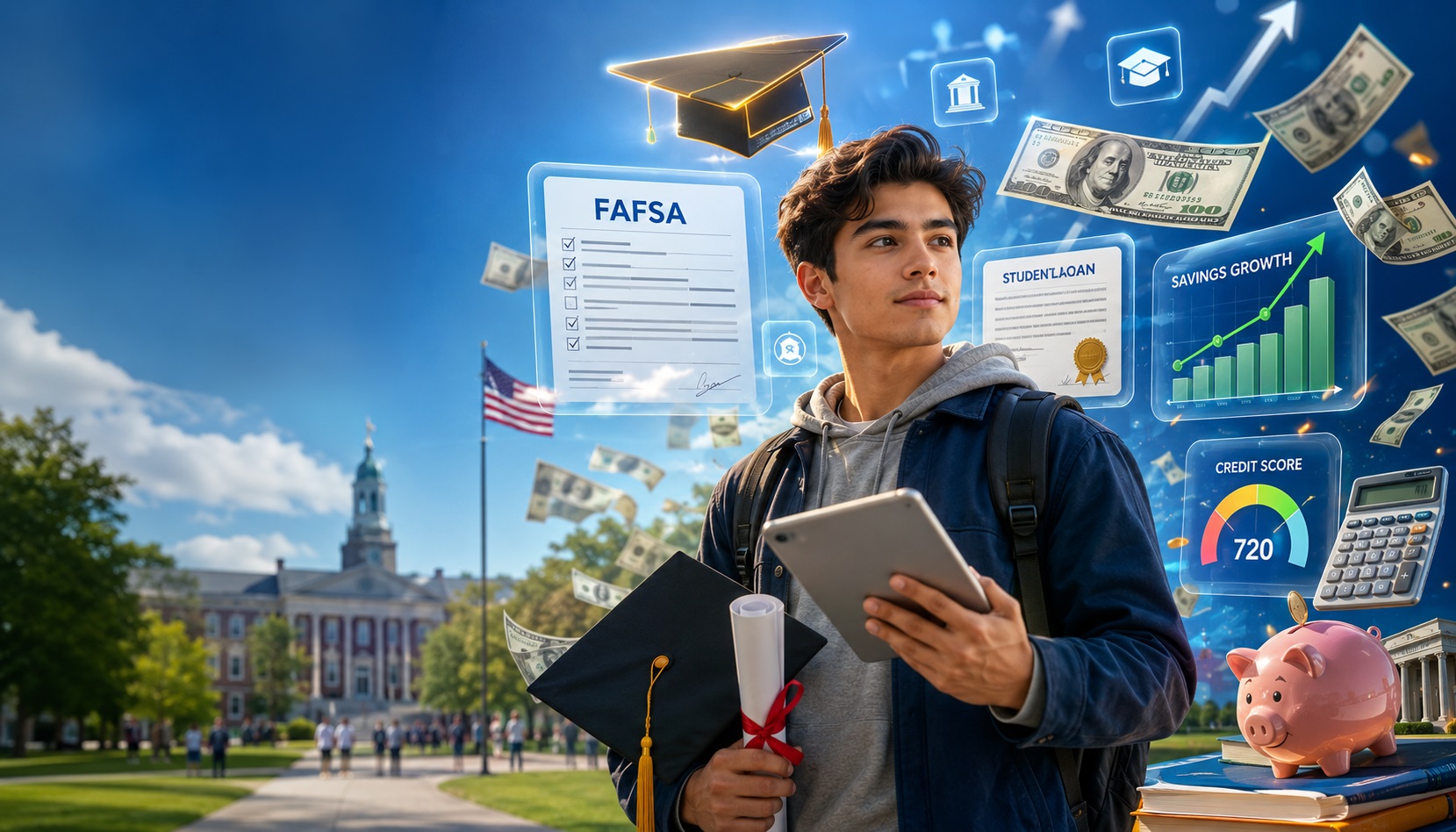
Student & Education Finance in the U.S.
Table of Contents
- The Real Economics of U.S. Higher Education
- How the Student Loan System Actually Works
- Federal vs Private Loans (Deep Breakdown)
- Student Loan Refinancing: Full Strategy Playbook
- Scholarships & Grants: Systematic Optimization Model
- 529 College Savings Plans: Tax Strategy + Wealth Building
- Loan Forgiveness Programs (PSLF, IDR, Hidden Rules)
- College Budgeting System That Actually Works
- Full Lifecycle Strategy (From Saving to Debt Exit)
- Common Financial Mistakes Students Make
- FAQs
- Final Expert Framework
1. The Real Economics of U.S. Higher Education
The United States higher education system is one of the most expensive in the world, but also one of the most financially complex.
As of the latest 2025–2026 education cost estimates:
- Public in-state universities: $22,000–$35,000/year
- Out-of-state public universities: $35,000–$50,000/year
- Private universities: $50,000–$65,000+/year
- Elite institutions (Ivy League): total cost often exceeds $90,000/year including living expenses
Over a typical 4-year degree:
- Public average total cost: $90,000–$140,000
- Private average total cost: $200,000–$300,000+
Meanwhile, U.S. student debt has crossed $1.7 trillion, affecting more than 43 million borrowers.
But the real issue is not just cost—it is financial structuring failure: students take loans without understanding repayment architecture, tax implications, or long-term income alignment.
This guide fixes that gap.
2. How the Student Loan System Actually Works
Student loans are not just “money borrowed for college”—they are structured financial instruments with different legal frameworks.
2.1 Federal Loan System
Federal student loans are issued by the U.S. Department of Education and include:
- Direct Subsidized Loans
- Direct Unsubsidized Loans
- PLUS Loans (Parent & Graduate)
Key Characteristics:
- Fixed interest rates set annually
- Government-backed protections
- Income-driven repayment plans
- Eligibility for forgiveness programs
Strategic Advantage:
Federal loans act like “flexible debt” because repayment can adapt to income changes.
2.2 Private Loan System
Private loans are issued by:
- Banks
- Credit unions
- Online lenders
Key Characteristics:
- Credit-score dependent
- May require cosigner
- Fixed or variable interest rates
- No federal protections
Risk Profile:
Private loans behave like standard consumer debt, meaning:
- No forgiveness programs
- Limited hardship protection
- Aggressive repayment enforcement
2.3 The Hidden System Problem
Most students mix federal + private loans without understanding:
- Interest capitalization effects
- Repayment hierarchy
- Long-term compounding burden
This is why identical degrees produce drastically different financial outcomes.
3. Federal vs Private Loans (Deep Breakdown Strategy)
A financially optimized student always follows this order:
Step 1: Scholarships and grants
Step 2: Federal loans
Step 3: Work-study or income
Step 4: Private loans (last resort)
3.1 Federal Loan Advantages
- Income-driven repayment (IDR)
- Deferment options
- Forgiveness eligibility
- Lower default risk
3.2 Private Loan Advantages
- Higher borrowing limits
- Faster approval
- Useful for gap funding
3.3 Decision Matrix
| Situation | Best Choice |
|---|---|
| Low income family | Federal + grants |
| High credit cosigner | Mixed (federal + private) |
| Graduate student | Federal priority |
| Short-term funding gap | Private loan |
4. Student Loan Refinancing: Full Strategy Playbook
Refinancing is one of the most powerful debt optimization tools if used correctly.
Refinancing means replacing existing loans with a new loan at a lower interest rate.
4.1 When Refinancing Works Best
- Stable employment
- Credit score above 700+
- Income significantly higher than debt obligation
- Not using forgiveness programs
4.2 When Refinancing Is Dangerous
- Public Service Loan Forgiveness (PSLF) candidate
- Unstable income
- Near deferment eligibility
- High probability of job change
4.3 Real Optimization Strategy
Best-performing borrowers follow this sequence:
- Graduate
- Build credit stability (12–24 months)
- Increase income
- Refinance aggressively (reduce interest by 1–3%)
- Accelerate repayment
4.4 Interest Impact Example
A $40,000 loan:
- 7.5% interest → $16,000+ interest over time
- 4.5% refinance → ~$9,000 interest
Savings: $7,000+
5. Scholarships & Grants: Systematic Optimization Model
Scholarships are not random—they are an information system.
5.1 Categories
- Merit-based scholarships
- Need-based aid
- Athletic scholarships
- Department-specific awards
- Corporate-sponsored scholarships
- Minority-targeted grants
5.2 High-Performance Strategy
Successful students treat scholarships like a pipeline:
Phase 1: Local scholarships
Lower competition, higher success rate
Phase 2: Institutional scholarships
University-based funding programs
Phase 3: National scholarships
High competition but high reward
5.3 Application Efficiency Strategy
Winning students:
- Reuse essay frameworks
- Adjust narratives per scholarship
- Apply in batches (10–20/week cycles)
5.4 Hidden Insight
Scholarship success correlates more with application volume consistency than writing quality alone.
6. 529 College Savings Plans: Tax Strategy + Wealth Building
This is one of the most powerful long-term education funding tools.
6.1 How It Works
A 529 plan allows:
- Tax-free growth
- Tax-free withdrawals (qualified expenses)
- State-level tax incentives in many states
6.2 Qualified Expenses
- Tuition
- Room & board
- Books
- Required supplies
Some states also allow K–12 tuition use.
6.3 Wealth Strategy Angle
If started early (child age 0–5), compounding investment returns can:
- Reduce future loan burden by 30–70%
- Eliminate private loan dependency
- Reduce financial stress during college years
6.4 Key Mistake
Many families start too late (high school age), losing compounding advantage.
7. Loan Forgiveness Programs (Deep System Breakdown)
Forgiveness programs are structured debt cancellation systems, not “free money”.
7.1 Public Service Loan Forgiveness (PSLF)
- Requires 120 qualifying payments
- Must work for government or nonprofit
- Remaining balance forgiven tax-free (current law structure)
Common Failure Point: Borrowers often discover after years that their loans or employer were not eligible.
7.2 Income-Driven Repayment (IDR)
- Payments based on income
- Forgiveness after 20–25 years
Risk: Long duration means interest accumulation is significant.
7.3 Strategic Insight
Forgiveness should be treated as:
A long-term repayment optimization path, not a default assumption.
8. College Budgeting System That Actually Works
Most students fail financially due to lack of structured budgeting.
8.1 Monthly Framework
| Category | Ideal Range |
|---|---|
| Housing | 30–40% |
| Food | 15–20% |
| Transport | 10–15% |
| Education | 10–20% |
| Savings | 5–10% |
8.2 Behavioral Finance Insight
Students overspend mainly due to:
- Impulse food purchases
- Subscription stacking
- Social pressure spending
8.3 Optimization System
- Weekly budget tracking
- Automatic savings transfer
- Cash-based discretionary spending
9. Full Lifecycle Strategy (Education Finance Flow)
A complete system looks like this:
Phase 1: Pre-college
- 529 planning
- scholarship targeting
Phase 2: College years
- minimize private loans
- optimize federal aid
- strict budgeting
Phase 3: Graduation
- refinance evaluation
- income growth alignment
Phase 4: Repayment
- accelerate payoff OR forgiveness pathway
10. Common Financial Mistakes Students Make
- Taking private loans first
- Ignoring interest rates
- Not applying for scholarships
- Not understanding forgiveness eligibility
- Over-borrowing for lifestyle expenses
11. FAQs
What is the safest way to fund college in the U.S.?
Ans: A combination of scholarships, federal loans, and 529 savings is safest.
Should students refinance loans immediately after graduation?
Ans: No. Wait until income stabilizes.
Are 529 plans still worth it in 2026?
Ans: Yes, due to tax-free growth and long-term compounding benefits.
What is the biggest mistake in student finance?
Ans: Taking private loans without exploring federal or scholarship options.
12. Final Expert Framework
A winning student finance system follows:
- Early planning (529 + scholarships)
- Smart borrowing (federal first)
- Controlled spending (budget discipline)
- Strategic exit (refinance or forgiveness)
Education finance is not debt management—it is lifecycle financial engineering.