Best Cashback Cards for Grocery Rewards (2026 Guide)
Written on July 12, 2026
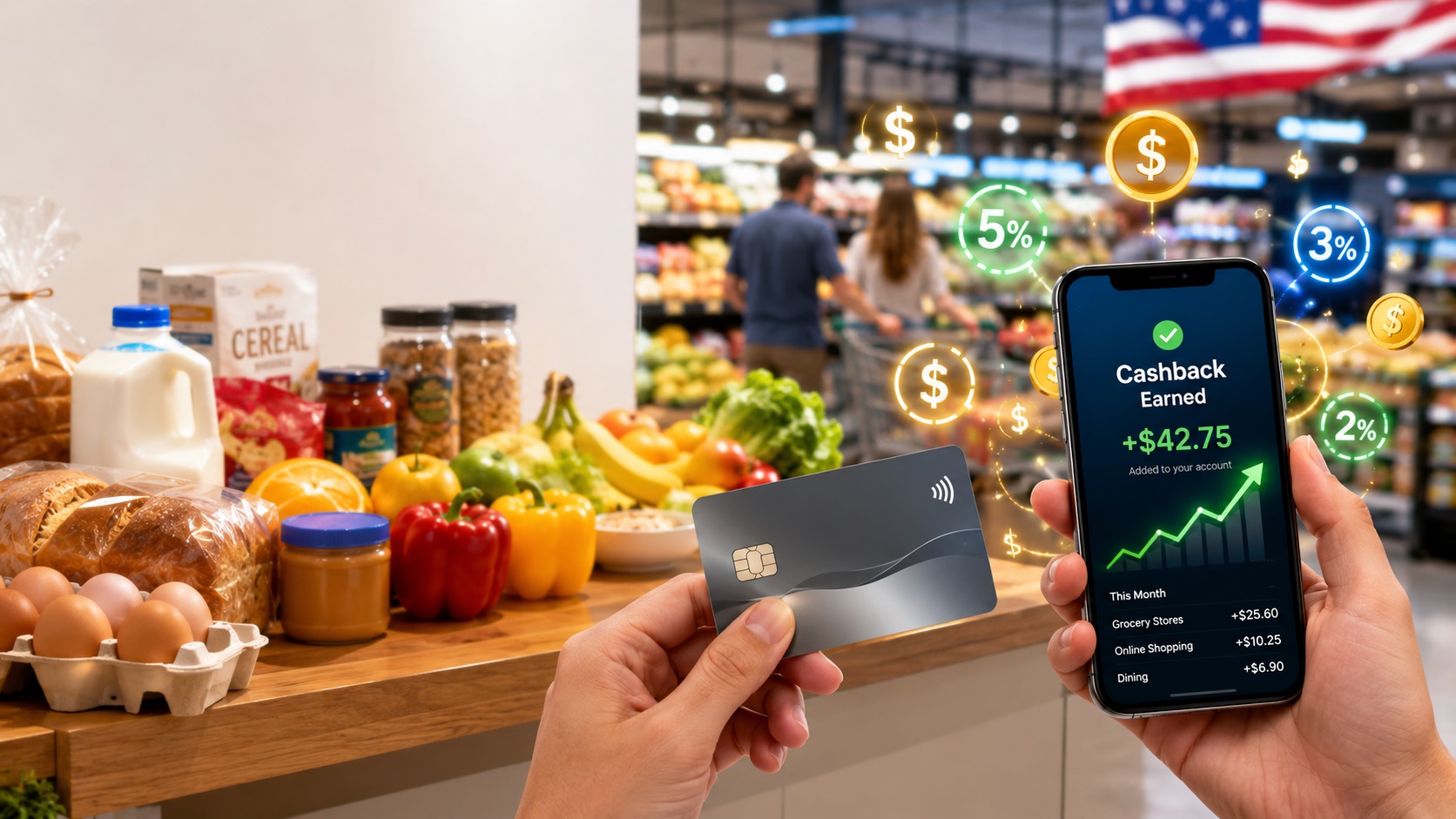
Best Cashback Cards for Grocery Rewards in the US (2026 Guide)
American households spend thousands of dollars every year on groceries.
According to the latest consumer expenditure data published by federal agencies and industry reports, food-at-home spending remains one of the largest recurring household expenses across the United States. For many families, grocery purchases exceed spending on streaming services, gym memberships, and discretionary entertainment combined.
The good news?
A well-chosen cashback credit card can return hundreds or even thousands of dollars annually from spending you already make.
But not all grocery rewards cards are equal.
Some cards offer elevated supermarket rewards but cap earnings. Others provide flexible cashback structures that work better for larger families. A few cards include grocery delivery benefits, streaming credits, purchase protection, and travel perks that significantly increase total value.
This guide compares the best cashback cards for grocery rewards available to US consumers in 2026.
You’ll learn:
- Which cards earn the highest grocery rewards
- Which card is best for families
- Which card is best for wholesale clubs
- Which card is best for online grocery delivery
- How to maximize annual cashback
- Common mistakes that reduce rewards
- How to choose the right card for your spending pattern
Quick Comparison Table
| Card Type | Grocery Cashback | Annual Fee | Best For |
|---|---|---|---|
| Premium Grocery Card | Up to 6% | Medium | High grocery spenders |
| Rotating Category Card | Up to 5% | $0 | Flexible earners |
| Flat Cashback Card | 2% Everywhere | $0 | Simplicity |
| Wholesale Club Card | Club-focused rewards | $0-$95 | Costco/Sam’s shoppers |
| Family Rewards Card | Grocery + Gas | Varies | Households |
Why Grocery Rewards Matter More Than Ever
Food inflation has remained a major concern for American consumers over the last several years.
Even as inflation moderates compared with previous peaks, grocery prices remain significantly higher than pre-pandemic levels.
For a household spending:
- $600 monthly on groceries
- $7,200 annually
A 6% cashback card generates:
$432 yearly
Compare that with:
- 1% cashback = $72
- 2% cashback = $144
- 3% cashback = $216
- 6% cashback = $432
The difference between the wrong card and the right card can exceed $350 annually.
That is essentially free money from spending already occurring.
What Counts as Grocery Spending?
Many consumers mistakenly assume all food purchases qualify for grocery rewards.
That is not always true.
Most issuers classify spending using merchant category codes (MCCs).
Typically eligible:
- Supermarkets
- Neighborhood grocery stores
- Regional grocery chains
- Online grocery delivery services
- Certain grocery pickup purchases
Often excluded:
- Warehouse clubs
- Convenience stores
- Gas stations
- Specialty food retailers
- Restaurants
- Meal subscription services
Always verify the issuer’s terms before applying.
Best Grocery Cashback Card for Most Americans
Why It Wins
The strongest grocery rewards cards generally combine:
- High cashback rates
- Large annual spending limits
- Additional category bonuses
- Purchase protections
- Reliable redemption options
For households spending between:
$500–$1,200 monthly
a premium grocery cashback card often produces the highest annual return.
Example
Monthly grocery spend: $800
Annual spend: $9,600
At 6% cashback: $576 annual rewards
Even after an annual fee, net rewards remain attractive.
Best Grocery Cashback Card for Families
Families have different spending patterns than single consumers.
Typical family grocery expenses include:
- Fresh produce
- School lunches
- Household supplies
- Dairy products
- Bulk purchases
- Weekly shopping trips
A family-focused rewards card should provide:
- High grocery earn rates
- Gas station rewards
- Streaming benefits
- Flexible redemption options
Because families often spend heavily in multiple categories, a card that combines grocery and gas rewards frequently delivers the best overall value.
Best Grocery Card for Online Grocery Delivery
Online grocery shopping continues to grow.
Popular services include:
- Grocery pickup
- Same-day delivery
- Subscription delivery programs
Consumers increasingly value convenience.
The ideal card should:
- Earn elevated grocery rewards online
- Cover delivery fees through credits
- Include purchase protection
- Support digital wallet payments
For busy professionals and parents, online grocery rewards can significantly boost annual savings.
Best Grocery Cashback Card for Costco Shoppers
Warehouse clubs operate differently from traditional supermarkets.
Many premium grocery cards exclude:
- Costco
- Sam’s Club
- BJ’s Wholesale Club
This surprises many cardholders.
If most grocery spending occurs at warehouse clubs, prioritize:
- Wholesale-compatible cards
- Flat-rate cashback cards
- Cards with strong warehouse club earnings
A flat 2% card often outperforms grocery-specific cards when shopping primarily at Costco.
Best No-Annual-Fee Grocery Cashback Card
Not everyone wants an annual fee.
Fortunately, several no-fee cards deliver excellent grocery rewards.
Benefits include:
- Lower commitment
- Easier approval odds
- Simpler math
- Positive long-term value
Ideal users:
- Students
- Young professionals
- New credit card users
- Moderate spenders
If annual grocery spending remains below approximately $5,000–$6,000, a no-fee card frequently provides better overall value.
Grocery Rewards vs Flat Cashback Cards
One of the biggest mistakes consumers make is assuming category cards always win.
Sometimes a flat cashback card performs better.
Example:
Grocery Card
6% groceries
1% everything else
Annual spending:
- Groceries: $4,000
- Other spending: $20,000
Rewards:
$240 + $200 = $440
Flat Cashback Card
2% everywhere
Total spending:
$24,000
Rewards:
$480
In this scenario, the flat-rate card wins.
Always calculate total spending patterns.
Not just grocery purchases.
Real-Life Example: Family of Four
Consider a family spending:
| Category | Annual Spend |
|---|---|
| Groceries | $10,000 |
| Gas | $3,500 |
| Dining | $2,500 |
| Utilities | $4,000 |
| Miscellaneous | $5,000 |
Total: $25,000
With an optimized cashback strategy:
- Grocery rewards
- Gas rewards
- Flat cashback backup card
Total rewards may exceed: $800–$1,200 annually
without increasing spending.
The key is aligning cards with actual behavior.
How to Maximize Grocery Cashback
Most consumers leave money on the table.
Use these strategies.
1. Pair Multiple Cards
Instead of one card:
Use:
- Grocery card
- Gas card
- Flat-rate card
This often doubles rewards.
2. Use Digital Offers
Many issuers provide:
- Merchant discounts
- Cashback bonuses
- Statement credits
Activating these offers takes seconds.
Annual savings can be substantial.
3. Monitor Spending Caps
Many grocery cards cap bonus earnings.
Examples include:
- $6,000 annual cap
- $10,000 annual cap
- Quarterly caps
After the cap, earnings may drop dramatically.
Track spending carefully.
4. Stack Grocery Loyalty Programs
Combine:
- Credit card rewards
- Store loyalty rewards
- Digital coupons
- Manufacturer rebates
This creates layered savings.
5. Pay the Full Balance
Interest charges destroy cashback value.
A card earning: $300 cashback
but costing: $500 in interest
creates a net loss.
Always pay balances in full whenever possible.
Common Mistakes Grocery Reward Users Make
Ignoring Merchant Coding
Not every food purchase qualifies.
Review reward categories carefully.
Chasing Sign-Up Bonuses Only
Bonuses matter.
Long-term earning rates matter more.
Applying for Too Many Cards
Excessive applications can:
- Lower credit scores temporarily
- Increase complexity
- Reduce management efficiency
Focus on strategic card selection.
Missing Statement Deadlines
Late payments can trigger:
- Fees
- Penalty APRs
- Credit score damage
Automate payments whenever possible.
Redeeming Rewards Poorly
Some redemption methods reduce value.
Compare:
- Cashback
- Statement credits
- Bank deposits
- Gift cards
- Travel redemptions
Choose the highest-value option.
How Credit Score Affects Approval Odds
Most premium grocery cashback cards prefer:
Excellent Credit
740+
Highest approval likelihood.
Good Credit
670–739
Generally competitive.
Fair Credit
580–669
More limited options.
Poor Credit
Below 580
Focus first on credit-building products.
Improving credit before applying often leads to:
- Better approvals
- Higher limits
- Stronger rewards
Are Grocery Rewards Taxable?
In most situations:
Credit card rewards function as rebates.
That means cashback earned from spending is generally not treated as taxable income.
However:
- Bank account bonuses
- Referral bonuses
- Certain promotional incentives
may have different tax treatment.
Consult a qualified tax professional for specific circumstances.
Future Trends in Grocery Reward Cards
Several trends are shaping the market.
Personalized Rewards
Issuers increasingly tailor categories to spending habits.
Offers
Consumers receive customized cashback opportunities based on purchasing behavior.
Grocery Delivery Partnerships
More issuers are partnering with delivery platforms.
Digital Wallet Integration
Mobile payment adoption continues to rise.
Subscription Benefits
Expect additional:
- Delivery memberships
- Streaming credits
- Lifestyle perks
bundled with premium cards.
Who Should Get a Grocery Cashback Card?
Ideal candidates include:
Families
Large recurring grocery expenses.
Professionals
Consistent monthly spending.
Budget-Conscious Consumers
Seeking higher household savings.
Meal Planners
Predictable grocery purchasing habits.
Cashback Enthusiasts
Optimizing category spending.
Who Should Avoid One?
A grocery-focused card may not be ideal if:
- Grocery spending is minimal
- Most purchases occur at warehouse clubs
- Carrying balances is common
- Simplicity is preferred over optimization
In these cases, a flat-rate cashback card often works better.
Frequently Asked Questions
What is the best grocery cashback percentage?
Generally, 5% to 6% represents the highest sustained grocery cashback rates available to US consumers.
Do Walmart purchases count as groceries?
It depends on the specific location, merchant coding, and card issuer rules.
Do Costco purchases qualify for grocery rewards?
Many grocery cards exclude warehouse clubs.
Always verify issuer terms.
Is a grocery cashback card worth paying an annual fee?
If grocery spending is high enough, rewards can easily exceed annual fees.
Can I use multiple cashback cards?
Yes.
Many experienced users maintain:
- Grocery card
- Gas card
- Flat-rate card
for maximum rewards.
Final Verdict
For most American households, grocery spending represents one of the largest recurring monthly expenses.
Choosing the right grocery cashback credit card can generate hundreds of dollars in annual rewards without changing spending habits.
The best strategy is not necessarily selecting the card with the highest advertised percentage.
Instead:
- Match rewards to actual spending patterns
- Understand category restrictions
- Monitor annual spending caps
- Combine loyalty programs
- Pay balances in full
- Review cards regularly as benefits change
When implemented correctly, a grocery cashback strategy transforms everyday supermarket purchases into a meaningful source of annual savings.